
Introduction
You have a complex medical concept to explain, but a paragraph of text isn't quite enough. Should you use a detailed illustration, or would animation deliver it better?
Both can make healthcare information easier to understand, but they serve different purposes. An illustration can give the audience a closer look at anatomy, a medical device, or a biological structure. Animation can take that same subject further by showing movement, change, or a process unfolding over time.
So how do you decide between them?
It comes down to what you need to show, who needs to understand it, and how the visual will be used.
What Is Medical Illustration?
Medical illustration is a specialized form of visual communication used to explain medical, biological, and scientific information through stationary images.
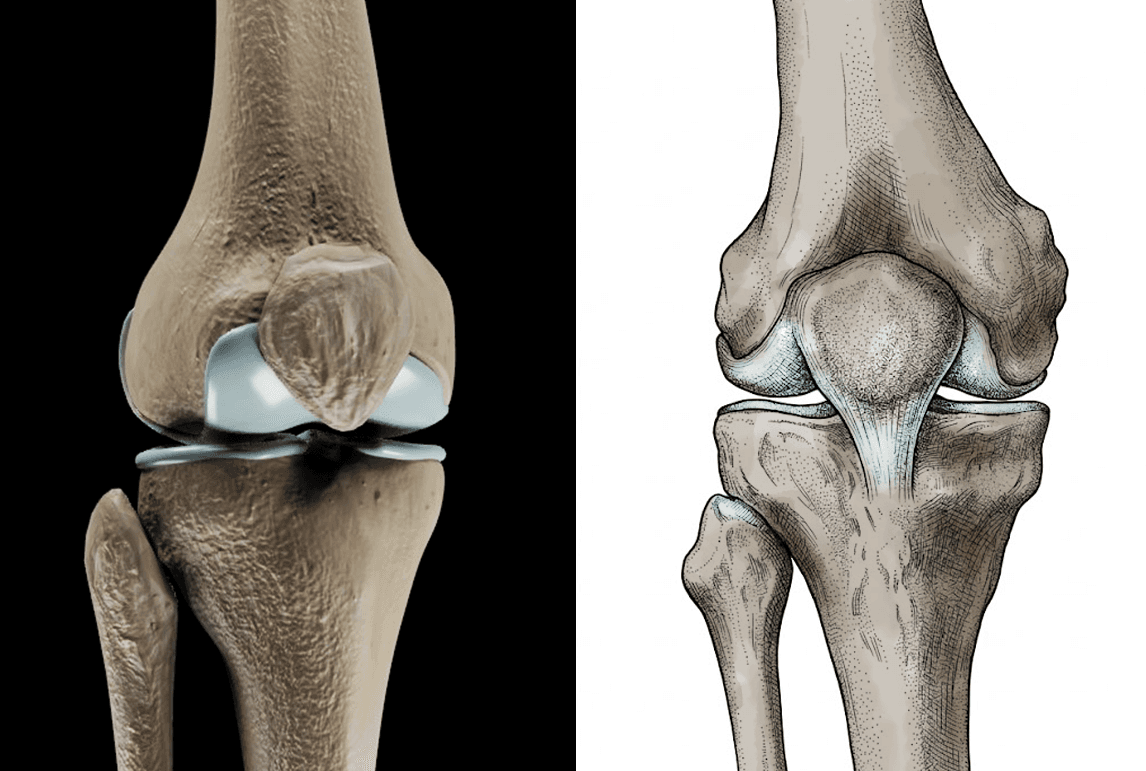
An illustration may show an organ, anatomical structure, surgical procedure, medical device, cellular environment, or another scientific subject in a way that is easier to understand than text alone.
Medical illustrators work with scientific and medical information to create visuals that are both clear and accurate. These illustrations can appear in textbooks, journals, presentations, patient education materials, websites, and other healthcare communications.
Medical illustration works particularly well when you need to:
Show anatomy or structural relationships
Highlight specific parts of an organ or a device
Explain a surgical technique
Create visuals for publications or presentations
Provide a detailed reference that viewers can study at their own pace
The main advantage is simple: everything the viewer needs to understand can be placed in one focused visual.
What Is Medical Animation?
Medical animation adds movement and time to scientific visualization.
Instead of showing one moment, an animation can explain how something changes, moves, interacts, or develops. This makes it useful for subjects that are difficult to communicate through a static image.
A medical animation might show a drug binding to a receptor, blood circulating through a vessel, a medical device functioning inside the body, or a cascade of events during a treatment.
It can be created in both 2D and 3D, depending on the complexity of the subject and the intended audience.
For example, a Mechanism of Action (MOA) animation can visually follow a therapy from its target to the biological response that follows.
If you'd like to explore this type of content in more detail, see our Mechanism of Action (MOA) Animation Guide.
Medical Illustration vs Animation: What's the Difference?
The simplest way to grasp the difference is to ask:
Do you need to show a structure, or do you need to show something happening?
Medical Illustration
Medical illustration is generally better suited to static information.
It can help viewers examine anatomy, structures, device components, or a particular medical concept without having to follow a sequence.
Medical Animation
Medical animation becomes more useful when movement, sequence, or change over time is important.
It can link multiple stages and help the viewer comprehend how one event leads to another.
For example, an illustration can show the structure of a receptor and its surrounding environment. An animation can show a drug reaching that receptor, binding to it, and triggering a downstream response.
Where Medical Illustration Fits Best
Medical illustration may be the better choice when the information can be communicated effectively through a focused, fixed visual.
Anatomy and structural explanations
A detailed illustration can highlight organs, tissues, anatomical layers, or specific structures without introducing unnecessary movement.
Medical devices
Illustrations can show the components, placement, or design of a device clearly, particularly when the viewer needs to examine specific details.
Publications and presentations
Static visuals can work well in scientific papers, textbooks, slide decks, posters, and educational materials where readers may want to study a particular image at their own pace.
Patient education
A carefully designed illustration can simplify anatomy, conditions, or procedures without overwhelming the viewer with too much visual information.
When Animation Adds More to the Explanation
Animation becomes especially useful when the process itself is important to understanding the subject.
Explaining biological processes
Processes such as cellular signaling, drug delivery, immune responses, or disease progression can involve several connected stages. Animation can bring those stages together and show how one event leads to another.
Explaining a mechanism of action
MOA animation can show how a drug, biologic, or therapy interacts with its target and what happens afterward. This can be particularly useful when the mechanism involves several molecular or cellular steps.
Demonstrating medical procedures
Animation can show the movement of instruments, physiological changes, or the sequence of a procedure without relying on real-life footage.
Showing how medical devices work
When a device has moving components or operates within the body, animation can demonstrate how those parts function over time.
Supporting patient education
Animation can also make unfamiliar medical concepts easier for patients to follow. A treatment process, procedure, disease progression, or basic explanation of how a therapy works can often be broken into simple visual steps.
The level of detail can be adjusted according to the audience, so patient education does not have to mean removing the science altogether. It means presenting the science in a way the intended audience can follow.
2D or 3D: Which One Is Better?
The choice isn't limited to illustration versus animation. Both formats can also be created in 2D or 3D.
2D medical illustration can provide clean anatomical diagrams, labelled structures, technical drawings, and simplified educational visuals.
3D medical illustration can bring depth, lighting, texture, and a more dimensional representation of anatomy or scientific structures.
2D medical animation can be effective for pathways, processes, patient education, and straightforward scientific explanations.
3D medical animation is particularly useful when spatial relationships, molecular structures, anatomy, or motion require greater visual depth.
There isn't a universal winner.
The better format is the one that makes the specific subject easier for the intended audience to understand.
Can Medical Illustration and Animation Be Used Together?
Yes. In many projects, you don't necessarily have to choose one or the other.
A 3D animation can produce individual frames that can later be used as still visuals for presentations, websites, educational materials, or other communications.
Likewise, an existing medical illustration can sometimes become the foundation for an animated explanation.
Using related visual assets across different formats can also help maintain a consistent visual language across a campaign.
If you'd like to see examples of medical animation and scientific visualization, you can explore the CDI Studio Work portfolio.
What About Cost?
Cost is another factor when choosing between medical illustration and animation, but there isn't a universal price for either.
A single illustration generally involves a different production process from an animation that requires scripting, storyboarding, asset development, movement, rendering, sound, and post-production.
The complexity of the science and the final deliverables can also affect the overall scope.
Rather than repeating detailed pricing information here, we've covered the major factors in our Medical Animation Cost Guide.
A Simple Way to Decide
If you're still unsure, start with these questions:
Do I need to show a structure?
→ Consider medical illustration.
Do I need to show movement or a process?
→ Consider medical animation.
Does the audience need to examine specific details?
→ A static illustration may work well.
Does the audience need to understand a sequence of events?
→ Animation may be more effective.
Do I need both detailed stills and movement?
→ Consider using illustration and animation together.
The right choice isn't necessarily the most technically advanced option. It is the one that communicates the science clearly without adding unnecessary complexity.
Choosing the Right Visual
Medical illustration and medical animation are not competing formats as much as they are different ways of explaining science.
If your audience needs to examine anatomy, structure, or a specific visual detail, an illustration may be enough. If they need to understand motion, sequencing events, or a biological process, animation can provide another layer of explanation.
And sometimes the ideal choice is a combination of both.
A useful starting question is simple:
Does my audience need to see a structure, or do they need to see something happen?
Once that is clear, choosing the right visual format becomes much easier.
Disclaimer
This article is intended for educational and informational purposes regarding medical illustration and animation. Production requirements, costs, and timelines vary according to project scope, scientific complexity, visual style, and deliverables.