Introduction
How does a drug interact with a cell?
What happens after it binds to its target? And how does that interaction eventually produce a therapeutic effect?
These questions can be difficult to explain using text, slides, or static diagrams alone.
A Mechanism of Action (MOA) animation is a medical animation designed to visually explain how a drug, biologic, or other therapy interacts with the body to produce its intended effect.
Depending on the therapy, an MOA animation might show receptor binding, cellular uptake, signaling pathways, gene expression, immune-cell activity, or other biological processes.
Instead of describing these events only with words, animation allows viewers to follow them visually and see how one biological event leads to the next.
Why Use an MOA Animation?
Modern therapies can involve biological mechanisms that are difficult to represent in a single illustration.This is particularly true for biologics, monoclonal antibodies, gene therapies, cell therapies, antibody-drug conjugates, and other targeted treatments.
An MOA animation can help simplify these processes by:
Showing What Cannot Be Seen
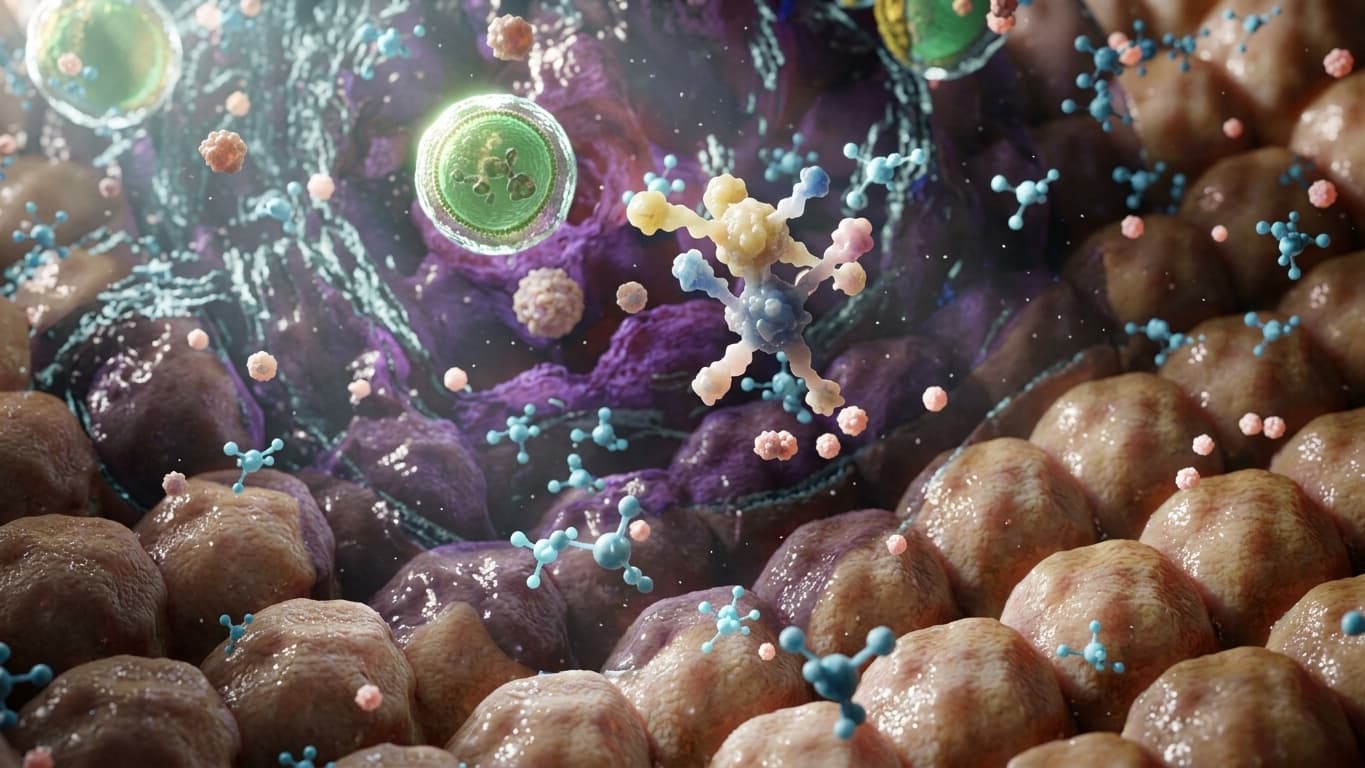
Molecular and cellular interactions happen at scales that cannot be observed directly. Animation can take the viewer inside a cell or tissue and illustrate processes such as receptor binding, cellular entry, intracellular signaling, or movement through biological pathways.
Connecting Multiple Steps
A mechanism is rarely just one event. A therapy may first reach a target, bind to a receptor, trigger a signaling pathway, and eventually produce a cellular response.
Animation can connect these stages into one continuous explanation.
Adjusting the Explanation to the Audience
The same mechanism may need to be explained differently to a patient, healthcare professional, investor, or scientific audience.
For example, a patient-facing animation may focus on the overall therapeutic concept, while an HCP or scientific animation can include greater molecular and cellular detail.
What Does an MOA Animation Show?
There is no single format for an MOA animation. What appears on screen depends on the therapy and the message the animation needs to communicate.
A typical animation may include:
Disease context — where the therapy acts and what biological problem is being addressed.
Drug or therapeutic entry — how the treatment reaches its target.
Target recognition — interaction between the therapy and a receptor, antigen, enzyme, or other target.
Cellular or molecular response — the signaling or biological events that follow.
Therapeutic effect — how these events contribute to the intended outcome.
For a complex therapy, the animation may move between several levels of scale, such as the body, tissue, cell, and molecular level.
The key is not to show every possible biological detail. The visuals should focus on the mechanism that the audience actually needs to understand.
2D vs. 3D MOA Animation
Both 2D and 3D animation can be used to explain mechanisms of action. The appropriate approach depends on the subject, audience, and level of visual detail required.
2D MOA Animation
2D animation can be effective for simpler pathways, educational content, patient communication, internal training, and digital content.
It can use diagrams, icons, illustrated cells, labels, and motion graphics to guide viewers through a mechanism without requiring highly detailed 3D environments.
3D MOA Animation
3D animation is useful when the mechanism benefits from spatial depth or detailed biological structures.
It can show molecules, cells, receptors, tissues, and their interactions from different angles, allowing the viewer to move between biological scales.
For highly detailed mechanisms, 3D can also make it easier to visually separate different structures and show how they interact over time.
The choice between 2D and 3D should therefore be based on what needs to be communicated, rather than assuming that one format is always better.
How Is an MOA Animation Created?
Creating an MOA animation usually involves several stages. The exact workflow varies depending on the project, but the process generally includes:
1. Scientific Research and Scripting
The process begins with understanding the therapy, its mechanism, the intended audience, and the key message.
Scientific literature, product information, clinical material, and other relevant sources can be used to develop the script and establish the biological sequence.
2. Storyboarding and Visual Planning
Once the script is established, the major scenes are planned visually.
The storyboard determines what the viewer will see at each stage and how the animation will move from one biological event to the next.
This is also an important stage for scientific review because major changes become more difficult once detailed animation has begun.
3. Asset Development
Depending on the project, the production team may create or adapt models of cells, molecules, organs, tissues, receptors, drug structures, or other biological elements.
For 3D projects, these assets are then prepared for animation.
4. Animation
The biological events are animated according to the approved storyboard.
This might involve showing a drug binding to its target, entering a cell, activating or blocking a pathway, interacting with another molecule, or producing a downstream cellular response.
5. Rendering and Post-Production
The final stage brings the individual elements together through rendering, compositing, motion graphics, voice-over, sound, captions, and other finishing work required for the final deliverables.
Where Are MOA Animations Used?
MOA animations can be adapted for different stages of pharmaceutical and biotech communication.
Healthcare Professional Education
An MOA animation can help physicians and other healthcare professionals understand how a therapy works, particularly when the mechanism involves multiple biological steps.
They can be used in presentations, digital educational materials, medical meetings, and training content.
Patient Education
For patients, the mechanism can be simplified to focus on the basic concept: what the treatment targets, what happens inside the body, and how that relates to its intended effect.
The level of scientific detail should be appropriate for the audience rather than simply reproducing a technical scientific explanation.
Internal Training
Pharmaceutical and biotech teams can also use MOA animations as educational material for internal training, helping different teams work from the same visual explanation of a therapy.
Scientific and Commercial Presentations
MOA animations can also be incorporated into scientific presentations, product communications, conferences, websites, and other channels where a complex therapeutic mechanism needs to be explained visually.
What Makes a Good MOA Animation?
Scientific accuracy is essential, but accuracy alone does not make an animation easy to understand.
A strong MOA animation should balance scientific detail with visual clarity.
A few principles are particularly important:
Keep the mechanism focused.
The animation should have a clear scientific takeaway rather than trying to explain every aspect of a therapy.
Use visuals to support the explanation.
Every biological structure and movement should have a purpose. Too much visual detail can make a mechanism harder to follow.
Match the level of detail to the audience.
A patient does not necessarily need the same molecular detail as a specialist or scientific audience.
Review the science early.
Scientific experts should have an opportunity to review the script and storyboard before extensive animation work begins.
Keep the sequence logical.
The viewer should be able to understand what happens first, what happens next, and how those events lead to the therapeutic effect.
How Much Does an MOA Animation Cost?
There is no single price for an MOA animation.
The budget can vary depending on factors such as 2D or 3D production, scientific complexity, custom assets, number of scenes, animation requirements, revisions, and final deliverables.
Rather than repeating pricing ranges here, see our Medical Animation Cost Guide for a broader explanation of what influences medical animation pricing.
Concluding Thoughts
An MOA animation turns a complex therapeutic mechanism into a visual sequence that audiences can follow.
From a simple pathway to a detailed interaction between drugs, receptors, cells, and tissues, the level of animation can be adapted to the science and the audience.
The most effective MOA animations are not necessarily the ones with the most detail. They are the ones that identify what the audience needs to understand and use the right level of visual detail to explain it clearly.
Disclaimer
This article is intended for educational and informational purposes regarding medical animation and scientific visualization. It does not provide medical advice or replace professional medical guidance. The scientific content of an animation should be reviewed by appropriate subject-matter experts before use in healthcare, pharmaceutical, or scientific communications.