
Beyond Blood: Point-of-Care Diagnostics
Interactive scroll-driven animation exploring real-time blood analysis powered by microfluidics and AI
Scroll to see blood in motion. A drop of blood, microfluidics, AI, and diagnostic results in minutes—not days.
A CDI Interactive experience by CDI StudioUpdated
It runs in its own tab so it gets the whole screen, the sound and the full frame rate.
The Promise of a Drop
Blood tells a story. Every cell, every marker, every count holds diagnostic truth. But traditional blood analysis requires days, labs, and centralized testing. Point-of-care diagnostics change that math.
Imagine testing anywhere—a clinic, a field, a patient's home. Results not in days but in minutes. The cost of a single test dropping from hundreds to dollars. Precision medicine reaching beyond hospitals into the hands of people who need it most.
Microfluidics Meets AI
Microfluidic devices work at the scale of a whisper: precise channels route blood cells with micrometer accuracy. As cells flow through, optical sensors capture their shape, size, and optical properties in real time.
That raw data becomes intelligence when AI enters the equation. Machine learning models trained on millions of cell images classify platelets from white cells from red cells in milliseconds. Morphological clues that once took a trained technician hours to parse now flow from sensor to diagnosis automatically.
The result: a complete blood count, a differential, even preliminary flags for anemia, infection, or clotting disorders, all from a single capillary drop in under five minutes.
Your Scroll Drives the Flow
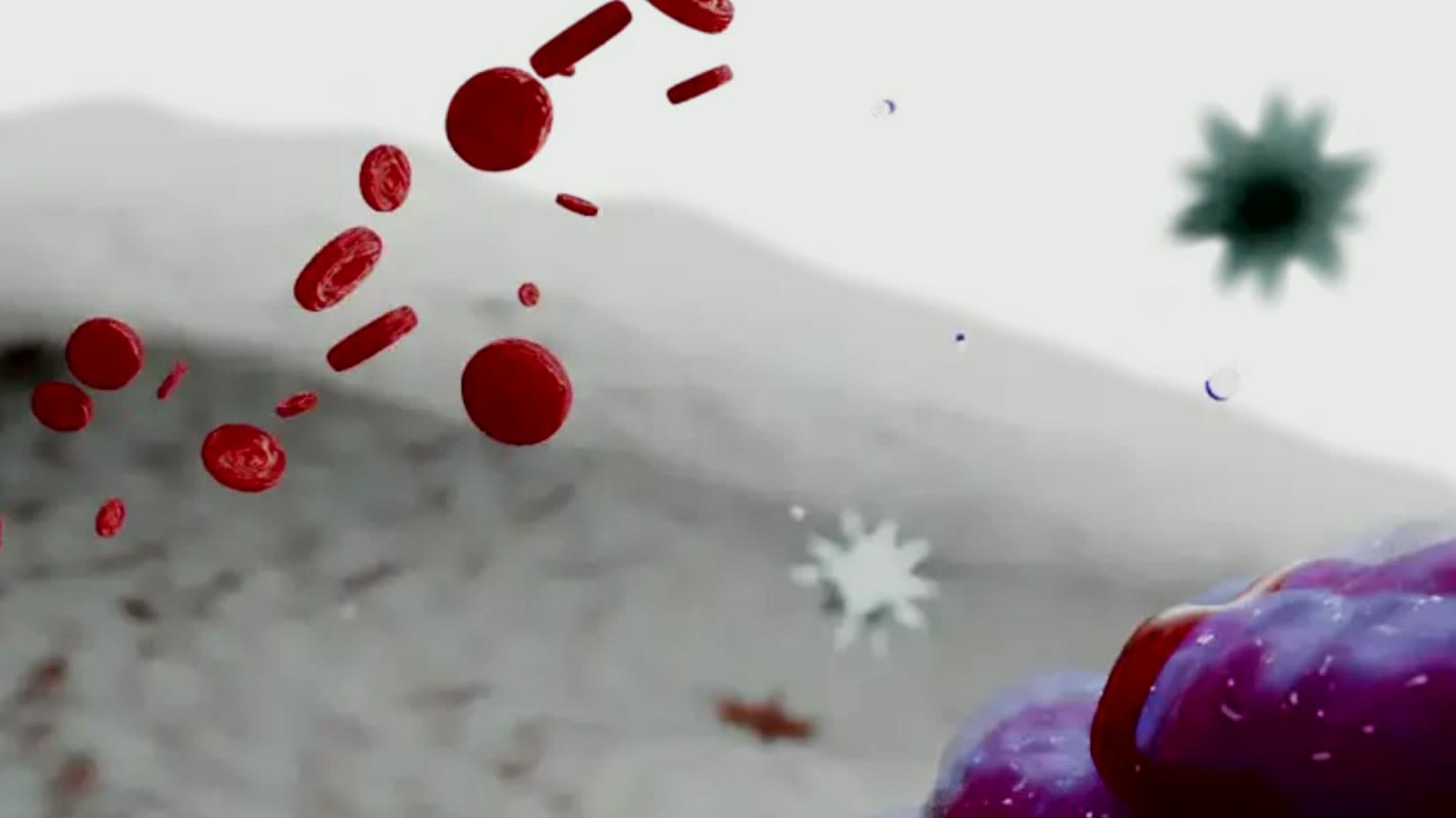
As you scroll through this page, red blood cells and platelets flow across the canvas. Your scroll position controls their motion, speed, and arrangement, mimicking the way cells stream through a microfluidic channel under pressure.
This is not passive watching. By scrolling, you experience the essence of point-of-care testing: the flow of biology becoming data in real time. Watch how cells organize, cluster, and move. This is what happens inside a point-of-care device when you apply a drop of blood and press start.
Why It Matters
Point-of-care blood diagnostics are reshaping healthcare access. Patients in remote regions no longer wait weeks for test results from centralized labs. Emergency departments can rule in or out critical conditions faster, enabling faster treatment. Chronic disease management becomes real-time and responsive.
For biotech and device companies, the opportunity is immense. The global POC diagnostics market is growing at double-digit rates. Regulatory pathways for AI-assisted hematology devices are maturing. The capillary bleeding test—humanity's oldest diagnostic ritual—is being reborn for the precision medicine era.
Frequently asked questions
What is a point-of-care blood test?
A point-of-care test is a diagnostic tool that produces results where a patient is—clinic, home, field—without sending samples to a centralized lab. POC blood tests use microfluidic devices and sensors to analyze blood composition in minutes, not days.
How accurate are microfluidic-based blood counts?
When paired with AI-driven image analysis, microfluidic systems can achieve accuracy comparable to clinical hematology analyzers for basic measures (RBC, WBC, platelet counts) and morphologic classification. Ongoing validation across diverse populations continues to improve specificity for rare cell types and disease states.
What does AI bring to blood analysis?
AI automates cell classification, morphology assessment, and anomaly detection from sensor data. Machine learning models trained on millions of labeled cell images can identify dysplasia, infection markers, and clotting disorders faster and more consistently than manual microscopy, while scaling to millions of tests globally without human bottlenecks.
Ready to Explore Point-of-Care Diagnostics?
Let's talk about bringing blood diagnostics to your patients, team, or clinical workflow.
Book a Discovery CallInteractive animations are priced per scope. Average turnaround: 15-25 days.