
Introduction
The human brain is one of the most intricate organs in the body, and understanding how it develops and functions remains a major focus of neuroscience. Despite decades of research, many questions about how the brain matures, functions, and responds to disease remain unanswered. The reason is simple: the brain is incredibly complex. With billions of neurons forming trillions of connections, studying it directly is far from straightforward.
For many years, researchers depended on laboratory cell cultures and animal models to investigate neurological disorders. While these approaches have contributed significantly to neuroscience, they cannot completely capture the uniqueness of the human brain.
This is where brain organoids step in and are changing the game.
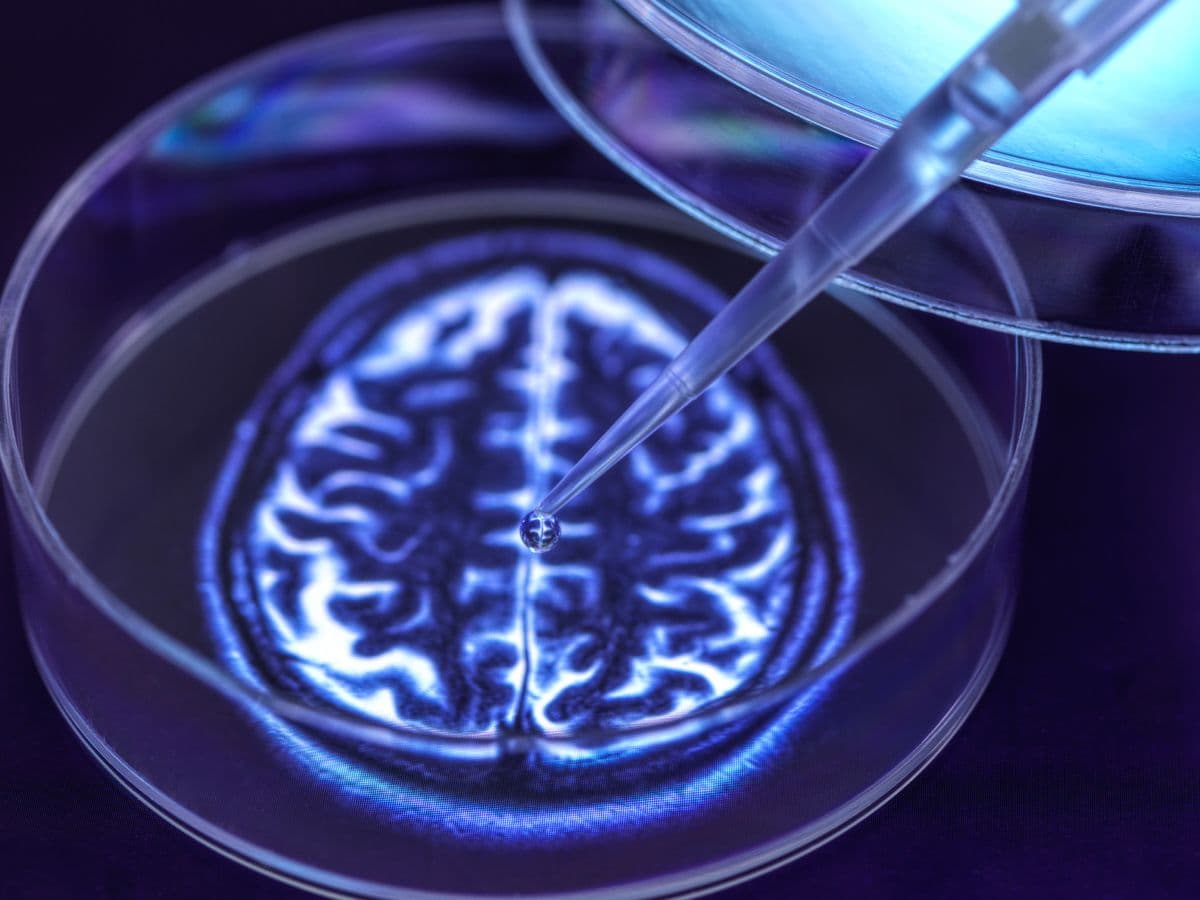
Often referred as "mini brains," the brain organoids are tiny, three-dimensional structures grown from human stem cells in a laboratory. While they are not real brains, they can mimic several important features of an early brain development. This remarkable capability allows researchers to observe human brain processes in ways that were once impossible.
Over the last several years, brain organoids have emerged as one of the most stimulating innovations of neuro-research. They are aiding scientists to better understand neurological diseases, accelerate drug development, and explore how the human brain forms during early development.
In this article, we'll take a closer look at what brain organoids are, how they're created, why they're becoming increasingly valuable in the neuroscience domain, and the opportunities and challenges they may pose for the future of medicine.
What Are Brain Organoids?
Brain organoids are miniature, three-dimensional tissue models grown from pluripotent stem cells. These stem cells have the unique ability to develop into various types of cells found in the human body, including neurons and supporting brain cells.
Under a meticulously controlled laboratory environment, these stem cells begin organizing themselves into structures that resemble certain regions of the developing brain. With time, they form layers of neural tissue and establish connections that can mirror some of the biological processes occurring during a human brain development.
Although brain organoids are often referred to as "mini brains," the term can be misleading. They do not think, feel, or possess consciousness. Instead, they serve as simplified biological models that allow scientists to study specific aspects of brain physiology.
How Are Brain Organoids Created?
The brain organoid's creation begins with stem cells, typically as induced pluripotent stem cells (iPSCs) which can be attained through the skin cells or blood samples of an adult individual.
Researchers place these cells into specialized culture environments containing nutrients and signaling molecules that encourage neural development. As the cells proliferate, they begin organizing themselves into small spherical clusters.
Over the course of several weeks or months, these clusters gradually mature into organoids containing multiple brain cell types. Scientists can even guide the progression toward specific brain regions, such as the cerebral cortex or hippocampus, depending on the focus of the study.
The fascinating aspect of this process is that much of the organization occurs naturally. Given the right conditions, the cells follow biological instructions encoded within their DNA, creating structures that resemble those found in the developing human brain.
This ability to recreate aspects of neurodevelopment in the laboratory has opened entirely new possibilities for neurobiology research.
Why Brain Organoids Have Become a Breakthrough in Neuroscience
To appreciate the significance of brain organoids, it's important to understand the limitations researchers have faced for decades.
Studying living human brain tissue is extremely difficult, and many neurological diseases progress over years or even take decades. While animal models provide valuable information, they cannot fully replicate the human body. As a result, scientists have often struggled to understand exactly how certain neurological disorders begin and deteriorate health.
Brain organoids are providing a bridge to fill this gap because they are derived from human cells. They offer a more realistic approach for investigating neural development and disease. Researchers can observe how neurons grow, communicate, and respond to genetic mutations in a controlled environment.1
This capability is transforming neuroscience by providing insights that were previously out of reach.
Applications of Brain Organoids in Neuroscience Research
Exploring Human Brain Development
One of the earliest and most valuable uses of brain organoids is studying how the human brain maturation occurs.
During pregnancy, countless biological events take place as stem cells transform into specialized brain cells and organize into complex structures. Many of these processes have traditionally been difficult to observe directly.
Brain organoids provide a window into these developmental stages. Experts can monitor how cells divide, migrate, and form neural networks, helping them better understand both normal development and progressive disorders.
These insights are refining our understanding of conditions that originate during early brain formation and may eventually contribute to earlier diagnosis and intervention strategies.
Modeling Neurological Disorders
Perhaps the most impactful application of brain organoids is disease modeling.
Many neurological disorders involve complex genetic and cellular changes that cannot be fully replicated using traditional laboratory techniques. By creating organoids from patients with specific genetic conditions, researchers can observe how diseases develop at the cellular level.
Brain organoids are currently being used to study a wide range of conditions, including:
Alzheimer's disease
Parkinson's disease
Autism spectrum disorders
Epilepsy
Huntington's disease
Schizophrenia
Microcephaly
In order to conduct more focused study, scientists are attempting to look at the underlying biological mechanisms that underlie these disorders rather than depending only on the symptoms seen in patients.
Accelerating Drug Discovery
Formulating treatments for neurological disorders has historically been one of the most demanding areas of medicine.
Many promising drugs perform well in animal studies but collapse during human clinical trials. This not only setbacks innovation but also increases research costs.
The ‘’mini brains’’ may offer a possible solution, since they more resemble human brain tissue, they can help researchers identify promising drug candidates earlier in the development phase.
They can evaluate how therapies affect neural cells, measure potential toxicity, and study treatment responses before advancing to substantial clinical trials.
As a result, brain organoids may help make drug discovery faster, more efficient, and ultimately more successful.
Supporting Personalized Medicine
No two patients are exactly alike. Genetic variance can significantly influence how individuals respond to treatment.
Brain organoids are helping experts move toward a more personalized approach to medicine. By creating organoids from a patient's own cells, scientists can develop individualized disease models that reflect that person's unique biology.
In the future, doctors may be able to test multiple treatment options on patient-derived organoids before selecting the most effective therapy. While this approach is still being refined, it represents one of the most exciting possibilities in precision medicine.
Understanding Infectious Diseases
Brain organoids have also proven valuable for studying infections that affect the nervous system.
A notable example came during the Zika virus outbreak. Researchers used brain organoids to demonstrate how the virus disrupts normal brain development, providing crucial insights into why some infected pregnancies resulted in microcephaly. Multiple organoid studies showed that Zika virus preferentially infects neural progenitor cells, reducing their growth and survival, which can impair normal brain development.2
This research highlighted how organoids can serve as rapid-response tools for investigating emerging health threats and understanding their effects on human tissues.
The Advantages of Brain Organoids
One of the biggest strengths of brain organoids is their ability to provide researchers with a closer representation of human brain biology than many traditional lab models. Because of their similarity to actual stem cells, they offer valuable insights into brain development, disease progression, and treatment responses.
Brain organoids have become particularly useful for studying neurological disorders, testing potential therapies, and exploring personalized medicine approaches. They also help reduce reliance on animal testing in certain stages of research, making studies both more efficient and potentially more representative of human biology.
As organoid technology continues to advance, researchers are gaining new opportunities to investigate complex brain conditions that were once difficult to study in a laboratory setting.
Current Challenges and Limitations
Despite their promise, brain organoids are still simplified models of the brain. They can mimic certain aspects of neurodevelopment and function, but they cannot fully reproduce the complexity of the billions of interconnected neurons found in a living human brain.
Researchers also face technical challenges, including variability between organoids, limited long-term growth due to the absence of a complete blood vessel network, and difficulties modeling fully mature adult brain tissue. These limitations can affect how accurately organoids represent certain neurological conditions.3
In addition, as organoid technology becomes increasingly sophisticated, ethical discussions surrounding responsible research practices and future applications continue to evolve. Addressing these scientific and ethical challenges will be essential for maximizing the potential of brain organoids in neuroscience research.
The Future of Brain Organoid Research
The future of brain organoids seems incredibly promising. Researchers are actively working to improve organoid complexity, enhance maturation, and develop vascularized models that can better mimic real brain tissue.
Advances in bioengineering, artificial intelligence, and stem cell technologies may further enhance organoid research. Scientists are also exploring ways to connect multiple organoid types to model interactions between different organs and systems.
As these innovations continue, brain organoids may play an increasingly important role in understanding neuro related diseases, discovering new therapies, and advancing personalized medicine.
Conclusion
Brain organoids represent one of the most assuring developments in modern neuroscience. By recreating aspects of human brain development in the laboratory, they provide researchers with powerful tools to study neural disorders, test new drugs, and investigate the complex biology of the human brain.
While important limitations remain, ongoing advances are steadily improving the accuracy and usefulness of these models. As technology continues to evolve, brain organoids are expected to become an even more valuable resource for neuroscience research and medical innovation.
By helping scientists better understand the brain's mysteries, these tiny laboratory-grown structures may contribute to major breakthroughs in the diagnosis, treatment, and prevention of neurological diseases in the years ahead.
References:
Hongxi W, Ruting W, Yiyang L, Qinglian H, Jibing C, Feng J. Human Brain Organoids: Development and Applications. Journal of Microbiology and Biotechnology. 2025 May 28;35.
Qian X, Nguyen HN, Jacob F, Song H, Ming GL. Using brain organoids to understand Zika virus-induced microcephaly. Development (Cambridge, England) [Internet]. 2017;144(6):952–7. Available from: https://www.ncbi.nlm.nih.gov/pubmed/28292840
Brain organoids are a transformative technology — but they need regulation. Nature [Internet]. 2026 Apr 8;652(8109):274–4. Available from: https://www.nature.com/articles/d41586-026-01021-w
Disclaimer: This article is intended for educational and informational purposes only. It does not provide medical advice, diagnosis, or treatment recommendations. We specialize in medical and scientific animation services that help communicate complex healthcare and biomedical concepts through engaging visual storytelling.